Simulizi
11 Oktoba 2026
A Narrow Escape from Child Marriage; Embracing a Future in Law.
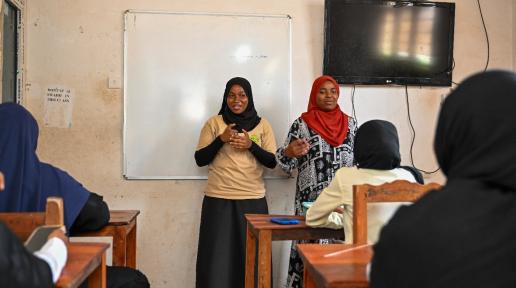
…..Sylvia’s Journey to Protect Girls’ Right to Education Bugarama, Shinyanga, Tanzania — At 13, Sylvia Buhame faced a future she had not chosen. While she should have been focusing on her education, growing up and dreaming about what she could become, the threat of child marriage put her childhood and aspirations at risk.With support from the Police Gender and Children’s Desk, Sylvia escaped child marriage and continued her education. Now 19, she is pursuing her studies in law at the University of Dodoma, demonstrating the power of protecting girls’ rights and ensuring they have the opportunity to realise their potential.Reflecting on her journey, Sylvia shares a message of hope for other girls who may be facing similar challenges. “I am grateful for the support that helped me continue with my education and pursue my dreams. I believe every girl deserves the opportunity to go to school, make her own choices and build a better future. Today, I want to use my education to make a difference in society and inspire other girls never to give up on their dreams.”Sylvia’s journey highlights the importance of timely intervention, accessible protection services and sustained investment in girls’ education. Her experience underscores a fundamental truth: no girl should have to give up her childhood or her dreams because of child marriage.Protection that opens doors to opportunityFor girls at risk of child marriage, the support of trusted protection services can make a life-changing difference. In Sylvia’s case, the Police Gender and Children’s Desk played an important role in helping her escape the threat of child marriage and continue pursuing her education.Police Gender and Children’s Desks provide an important channel for reporting abuse, responding to Gender Based Violence and connecting girls at risk with appropriate protection services. By strengthening these mechanisms, communities and institutions can help safeguard girls’ rights and keep their futures within reach.Ibrahim Jafari, a police officer, emphasises the importance of protecting girls from gender based violence and harmful practices and ensuring they have the opportunity to pursue their ambitions.“Every girl deserves to grow up in safety, continue her education and make decisions about her own future. When we intervene to protect a girl from child marriage, we are not only protecting her childhood; we are helping preserve her opportunities and potential.”For Sylvia, the intervention helped keep open a path that child marriage could have closed. Her academic progress and pursuit of legal studies represent a future shaped by learning, ambition and opportunity rather than an early marriage she did not choose.Partnerships that protect girls’ rightsThe United Nations Population Fund (UNFPA), in partnership with UN Women and with support from the Government of the Republic of Korea through the Korea International Cooperation Agency (KOICA), has supported initiatives to strengthen protection and response mechanisms for women and girls affected by gender based violence and harmful practices including earl;y and forced child marriage.The project strengthened the systems by by building the capacity of local institutions, law enforcement, and health service providers across Shinyanga and Singida.This included establishing, equipping, and operationalizing survivor-centered One Stop Centers (OSCs) at health facilities and Police Gender and Children's Desks (PGCDs), alongside training 292 health and social workers and 43 police officers in survivor-centered clinical management and cross-sectoral referral protocols. These efforts contribute to strengthening institutional capacity to respond to gender based violence and harmful practices, improve access to protection services and promote the rights and well-being of women and children.Through collaboration with government institutions and other partners, UNFPA works to advance gender equality, protect the rights of women and girls, and address gender based violence and harmful practices that threaten their safety, dignity and opportunities. Such partnerships are important in ensuring that girls at risk of gender based violence and child marriage can access support and have the opportunity to continue their education. The support of the Government of the Republic of Korea through KOICA demonstrates the importance of international cooperation in strengthening systems that protect vulnerable women and girls. Working together, governments, development partners and communities can help create environments where girls are safe, their rights are respected and their aspirations are encouraged.Sylvia’s story illustrates why these investments matter. Protecting a girl from child marriage is not simply about preventing an early marriage; it is about safeguarding her right to learn, develop her abilities and determine the direction of her own life.A future shaped by her own choicesSylvia’s journey from the threat of child marriage in Bugarama to pursuing legal studies at the University of Dodoma offers hope to other girls who may be facing similar risks. Her story is a reminder that girls should be supported to learn, grow and define their own future and that families, communities and institutions all have a role to play. As the world marks the 2026 International Day of the Girl Child under the theme “End child marriage and invest in girls’ rights!”, Sylvia’s experience reinforces the urgency of protecting every girl’s childhood and investing in her opportunities.UNFPA Executive Director Diene Keita calls on governments, communities and partners to make sustained investments in girls’ rights:“Today, we call on governments, communities and partners to invest, at scale and over time, so that every girl goes to school; every girl receives quality sexual and reproductive healthcare; and every girl enters adulthood empowered as an agent of her own future. Together, let us stand with every girl and make sure her voice is heard, her choices are respected and her rights are upheld, everywhere.”The message is clear that, ending child marriage requires more than commitments. It demands sustained investment in education, quality sexual and reproductive healthcare, effective protection services and community action to challenge the social norms that deny girls their rights.Sylvia’s story is ultimately about the power of protecting a girl’s right to choose. When girls are safe, supported and able to continue their education, their futures remain theirs to shape.Every girl deserves a childhood. Every girl deserves an education. Every girl deserves the right to choose her future.End child marriage and invest in girls’ rights — because every girl deserves the opportunity to shape her own future